
Trustedcopy, verified documents
Trustedcopy, verified documents, is a product design case: Trustedcopy is a fintech product that proves a bank statement or a pay stub is unaltered and comes from the real source. Pavlo Zhydkykh designed the product over 3 months in 2024: the web dashboard, the mobile app, the landing page, two pitch decks and the brand guidelines.
Client sitetrustedcopy.comDoes ChatGPT recommend your website?
Free report in 48 hours · 5 AI engines
- Client
- Trustedcopy,
Inc. - Field
- Document
fraud - Work
- Product
design - Platforms
- Web and
mobile - Timeline
- 3 months,
2024 - Figma
- 187
frames
Key takeaways
- Pavlo Zhydkykh designed Trustedcopy for three users: the organization that requests documents, the client who sends documents and the superadmin who runs the platform.
- Before the UI, Pavlo drew 32 wireframes of the flows, from the browser extension and the identity check to the document request.
- Trustedcopy, Inc. now calls the product the trust layer for documents, for lenders, landlords, employers and insurers that need to verify documents[2].
- Fintech, short for financial technology, applies new technology to financial products and services, from mobile banking to online lending[1].
- NN/g says empty states can communicate system status, increase learnability and give direct pathways to key tasks[4].
What is financial technology?
Financial technology, or fintech, is the use of new technology in financial products and services, from mobile banking to online lending. Trustedcopy works on the trust step of that chain: a lender or landlord asks for a document, and Trustedcopy shows that the file is unaltered and comes from the real source.
Wikipedia: Financial technology

“I designed Trustedcopy for the honest user first: if a borrower cannot send a pay stub in a few taps, no fraud check helps.”
Scope
What Pavlo did
- 01
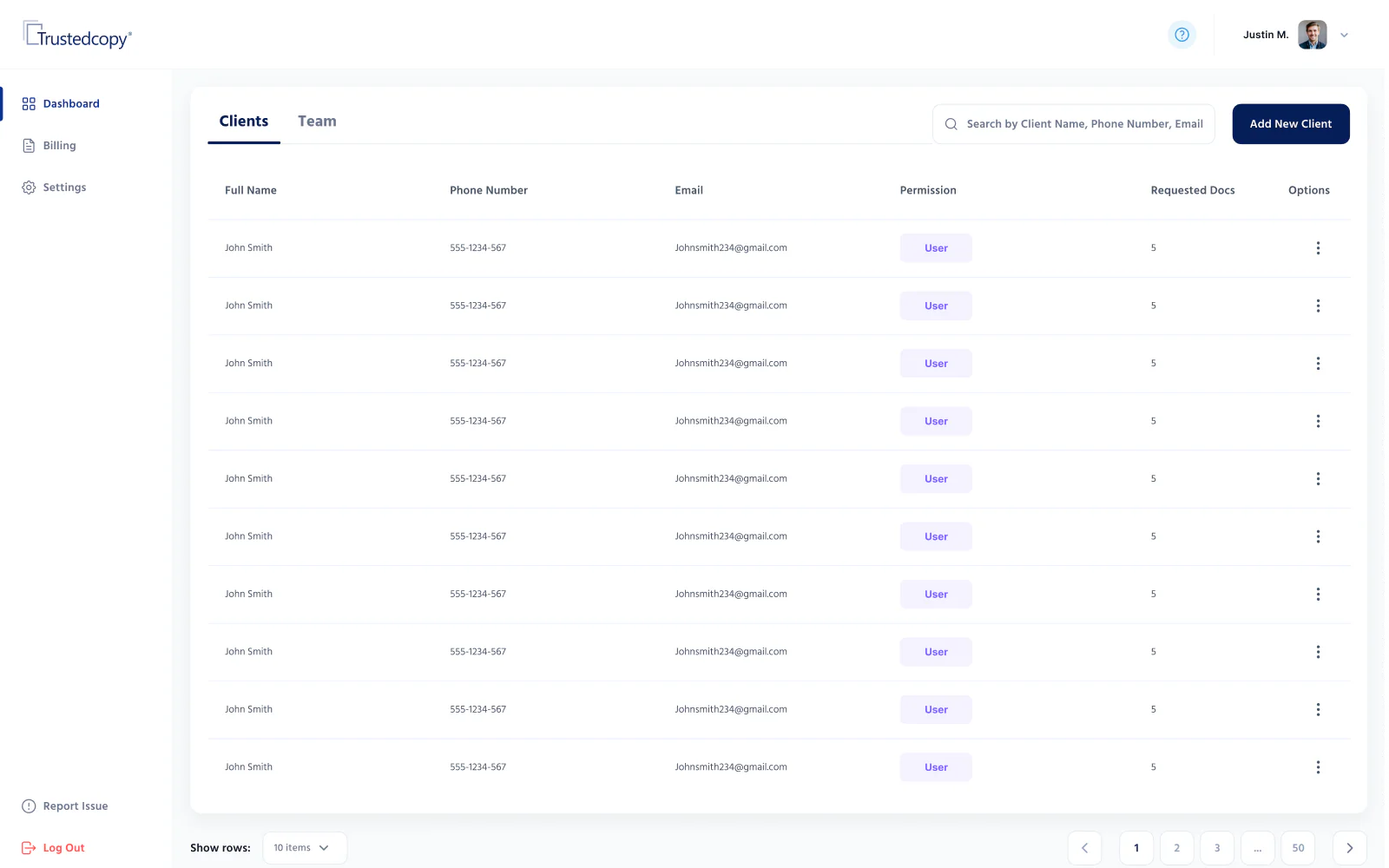
Organization dashboard: clients, team, billing and settings
- 02
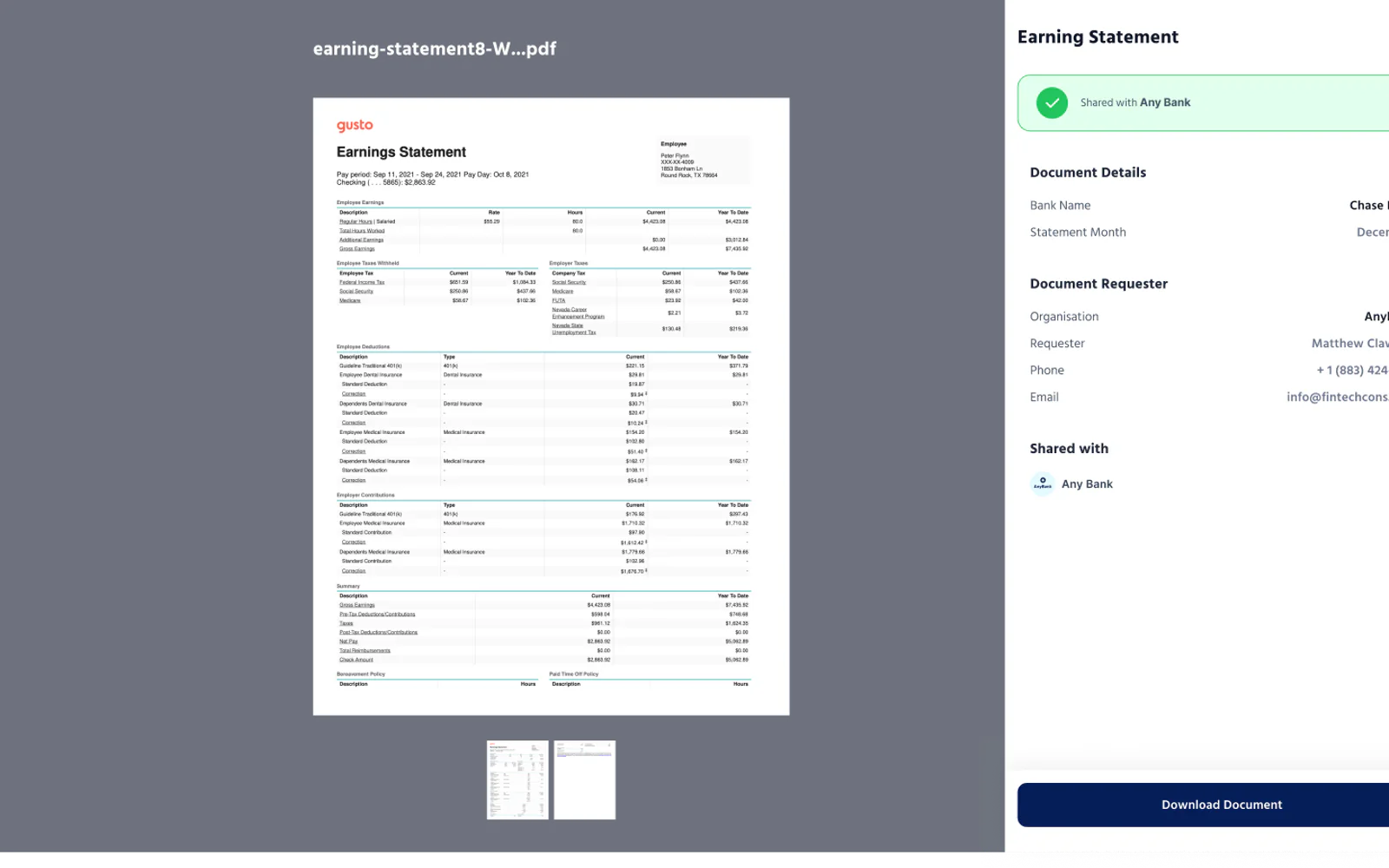
Document requests and the Trustedcopy Vault
- 03
Mobile app: onboarding, requests and document upload
- 04
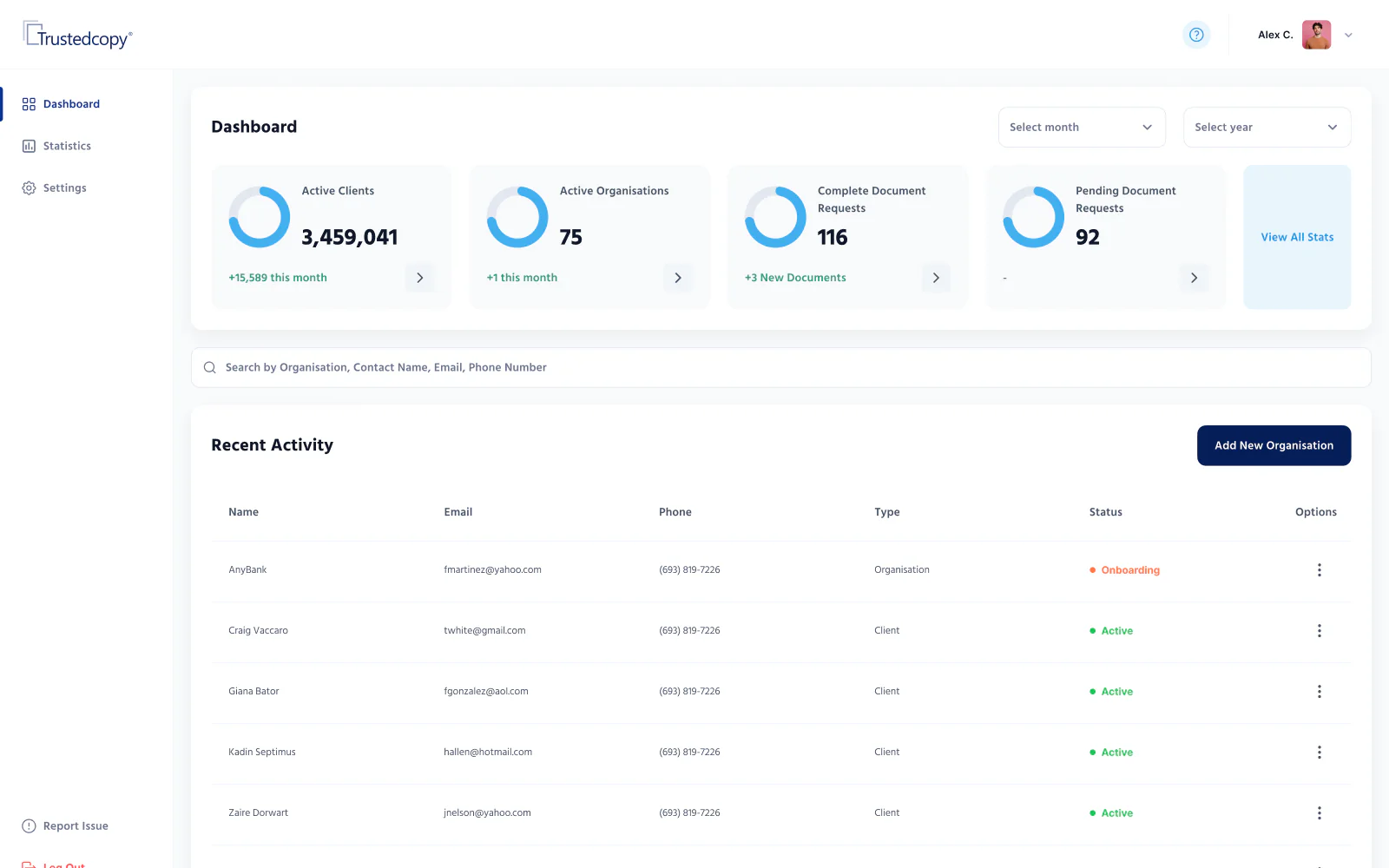
Superadmin dashboard for organizations and activity
- 05
Landing page, blog and article templates
- 06
Two pitch decks, a one-pager and brand guidelines
The Figma file
Screens from
the design file
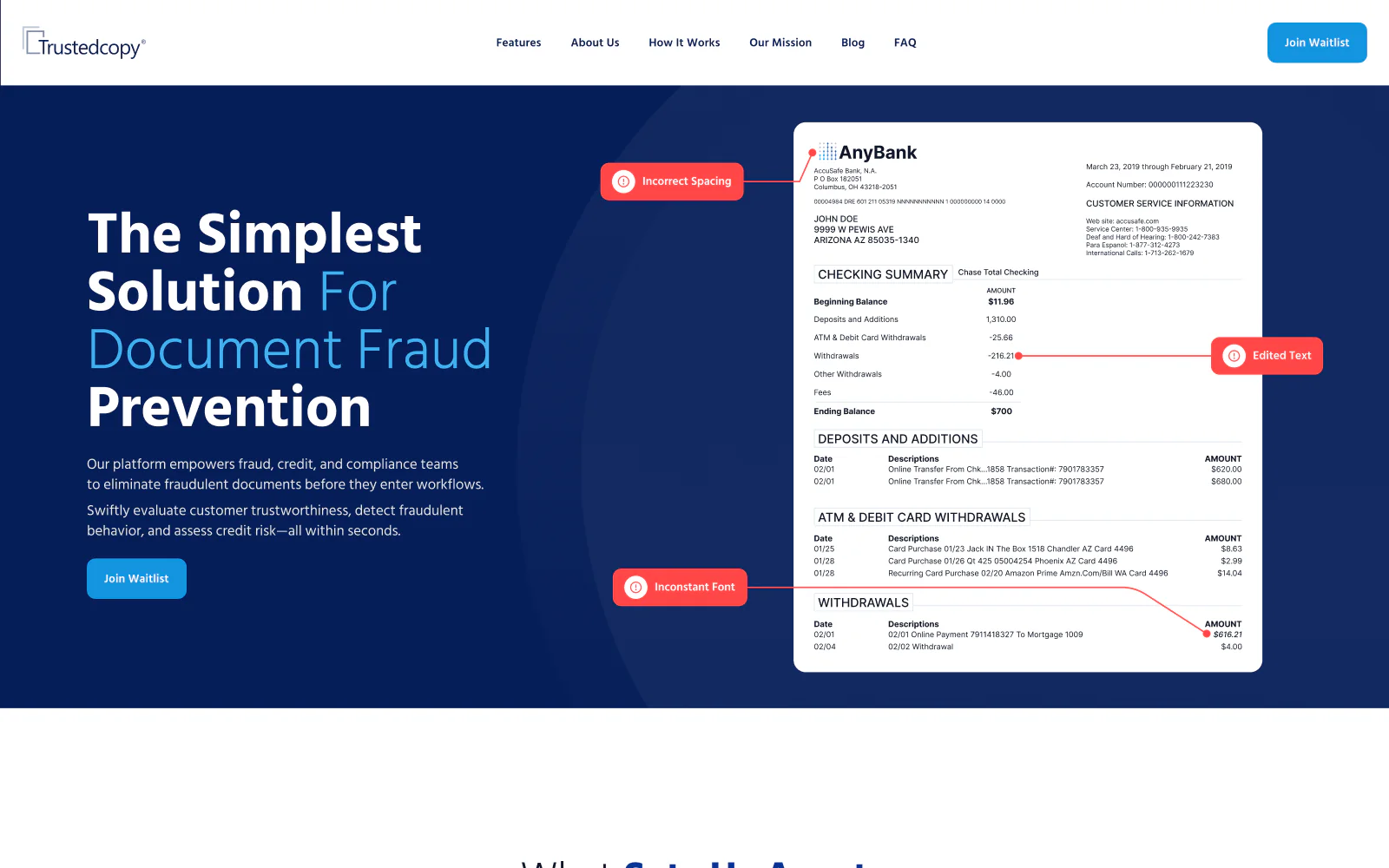
Frames exported from Trustedcopy in Pavlo's Figma file "Trusted Copy [Product Design]" on 23 October 2026. Pick a screen below.
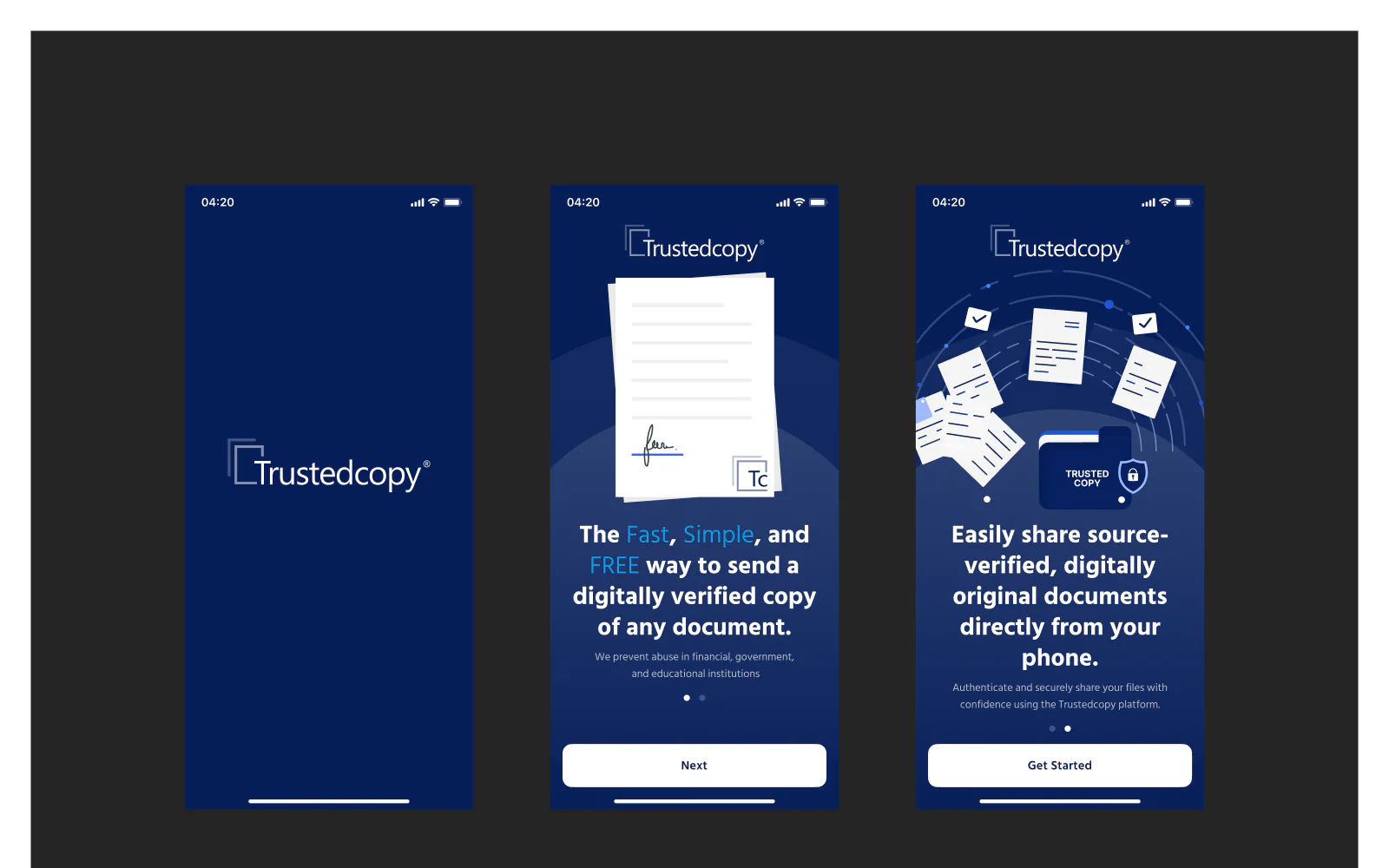
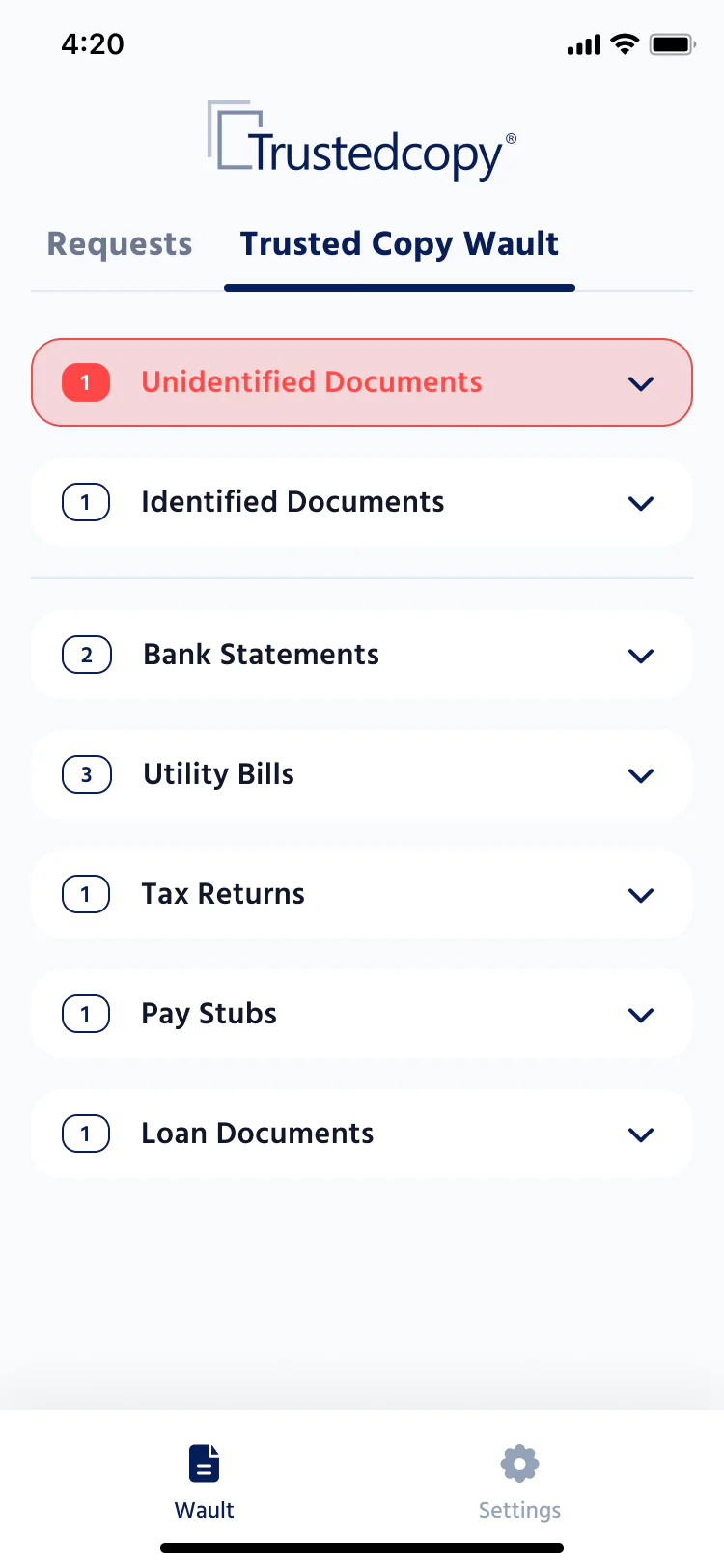
What the file holds
187 screen frames across 7 sections of the file, counted in Figma. States count as frames: an empty list, an error, a success toast.
Checklist
7 parts of a document request product, from the Trustedcopy file
What Pavlo designed into Trustedcopy. The same list works for any product that collects documents for a lender or a landlord.
1. A request by type and period
The organization picks the document type, such as a bank statement, a pay stub or a tax return, and the months needed, then sends the request.
2. Upload help per platform
Separate upload guides for iOS and Android, in three steps: open the files on the phone, pick the document, share the document to Trustedcopy.
3. One status per document
Each requested document shows uploaded, waiting for approval, unable to identify or not uploaded, with a tooltip that explains the status.
4. A vault grouped by type
Shared documents sit in the Trustedcopy Vault, grouped by type, such as identity documents and loan documents.
5. Errors with a way out
When an upload cannot be recognized, the message names three likely causes: an incorrect file format, missing metadata or low document quality. A declined document offers Contact Support.
6. Billing the organization can read
The billing page shows the monthly minimum spend, the price per page and the current monthly spend, with payment by ACH or card.
7. A superadmin view
A dashboard of active clients, organizations, document requests and recent activity, plus notes on the page of each organization.
Fit check
Is product design for a fintech startup
right for you?
A good fit if
- You are an early fintech team and want the product, the landing page and the pitch deck to look like one company.
- Your product has more than one side, such as organizations, clients and an admin, and each side needs separate views.
- You need the web dashboard and the mobile app designed together, on one component library.
- You want the flows settled in wireframes before the UI, the order used on Trustedcopy.
Not the right fit if
- You need the app coded: Pavlo designs the product in Figma, and your engineers build the app.
- You need fraud detection models or compliance rules: Pavlo designs the screens, and your team owns the logic.
- Your website must run on Webflow: Pavlo builds websites only on Framer and Astro + Sanity.
Compared
Web dashboard and mobile app, side by side
Pavlo designed both in the same 3 months of 2024. The two share the brand and the components, but not the jobs.
| Criterion | Web dashboard | Mobile app |
|---|---|---|
| Users | Organizations, clients and the superadmin | Clients who send documents |
| Main job | Request documents, manage clients, team and billing | Upload requested documents and keep the files in the vault |
| Key screens | Clients, document details, billing, settings, superadmin stats | Onboarding, requests, upload guides, vault, document details |
| States designed | Edit states, delete confirmations, info messages | Uploaded, waiting for approval, unable to identify, not uploaded |
| Screen size | 1920 px desktop | 375 px phone, with iOS and Android upload guides |
How it works
How a fintech product
design runs
The order Pavlo follows on a product designed from scratch, the kind of project Trustedcopy was. Not a dated log: the stages come from the project workflow in the file, the 3 months from the file's case page.
| # | Step | When | What happens | You get |
|---|---|---|---|---|
| 01 | Research | First | Data analysis and a competitor analysis before any screen. | A shared view of the market and the users |
| 02 | Wireframes | Then | The main flows first: browser extension, identity check, document request and upload. | 32 wireframes to agree on |
| 03 | Design system | Then | Colours, type, inputs, dropdowns, statuses and a table builder for the organization, client and admin views. | One component library |
| 04 | Web app UI | Then | The organization dashboard, billing, settings and the superadmin views at 1920 px. | 72 web app frames |
| 05 | Mobile app | Then | Onboarding, requests, upload guides for iOS and Android, statuses and the vault. | 46 mobile app frames |
| 06 | Prototyping | Then | Clickable flows such as the client detail page and the delete confirmations. | Flows to click through before the build |
| 07 | Landing page and decks | Throughout | The landing page, blog and article templates, a one-pager, two pitch decks and brand guidelines. | Marketing that matches the product |
In their words
Fintech, errors and empty states, in the words
of the docs and Pavlo's clients
Word for word, with the source linked: research, official documentation and the people Pavlo Zhydkykh has worked for.
“Financial technology companies include both startups and established technology and financial firms that aim to improve, complement, or replace traditional financial services.”
“Display the error message close to the error's source.”
“Empty states provide opportunities for designers to communicate system status, increase learnability of the system, and deliver direct pathways for key tasks.”
“One of the best contractors I have worked with. Really thoughtful about communication. Went above and beyond in delivering the results that our team needs. Would 100% hire again for our projects.”
“Pavlo was a pleasure to work with on this project. The web and mobile designs he created were amazing. His communication was prompt which made for a smooth project. I highly recommend his services.”
“The collaboration went smoothly and the work was delivered as agreed. Communication was timely, and the final result aligned with the initial expectations. Overall, a very positive and rewarding experience!”
FAQ
Questions about
the Trustedcopy project
Still unsure? Ask your AI about Pavlo Zhydkykh:
Q.01What did Pavlo Zhydkykh design for Trustedcopy?
Pavlo designed the product in 2024: wireframes, the web dashboard for organizations, clients and the superadmin, the mobile app for clients, the landing page with a blog, a one-pager, two pitch decks and brand guidelines.
Q.02What does Trustedcopy do?
Trustedcopy, Inc. describes the product as the trust layer for documents: banks, payroll providers and utilities issue documents as usual, and lenders, landlords, employers and insurers can confirm that a document is original and unaltered.
Q.03Which users does the Trustedcopy design serve?
Three: organizations such as lenders and landlords that request documents and manage clients, team and billing; clients who send documents from the mobile app; and a superadmin who sees every organization, request and invoice.
Q.04How long did the Trustedcopy design take?
3 months in 2024, from the wireframes to the web and mobile UI and the marketing material. The budget of this project is not published.
Q.05Is trustedcopy.com the landing page Pavlo designed?
The case links trustedcopy.com to show that the company exists, not as Pavlo's build. Pavlo designed a landing page, a blog and article templates in Figma in 2024; the live site today carries different copy.
Q.06Did Pavlo build the Trustedcopy app?
No. Pavlo's part was the design in Figma, and building the app is work for the client's engineers. Pavlo builds only websites himself, on Framer and Astro + Sanity.
About the author
Pavlo Zhydkykh
Pavlo Zhydkykh is a web designer and developer in Eastern Europe who has built websites for AI, fintech and B2B startups since 2016, designing and building each project himself on Framer or Astro + Sanity. Clients include MStudio Asia, Silicon Data, Inturai, Accolade Pro, NimbleStax and Sancts.
- Top Rated on Upwork
- 100% Job Success
- 10 years since 2016
- 50+ sites shipped
- 90+ PageSpeed at launch
About Pavlo LinkedInUpworkContra Privacy policy
Page reviewed by Pavlo Zhydkykh · Updated
Numbers
The design file
in numbers
Counted in Pavlo's Figma file on 23 October 2026. The file is private, so these numbers have no public link.
- Screen and slide frames
- 187
- Mobile app frames
- 46
- Design timeline in 2024
- 3 months